
Templa — Mobility as Flow
From the Tendai monks of Mount Hiei to pilgrims on the Camino, people have always walked to think.
- Year
- 2026
- Section
- Concept
- Keywords
- speculative design · eeg beads · walking · embodied ai
- Role
- Project Lead, Object Design Lead
- Team
- Sky ChengIsaiah SolisNicholas WanCollin HoAnn-Marie Henderson

A small piece that lives by your bed or on the table by the door. Drop the bracelet under the sphere to charge, and it seems to float up into it. Syncing your data turns into a tiny, weightless ritual.
Templa is a pair of EEG meditation beads — an old object, rethought — that lets you keep the quiet of a walk.
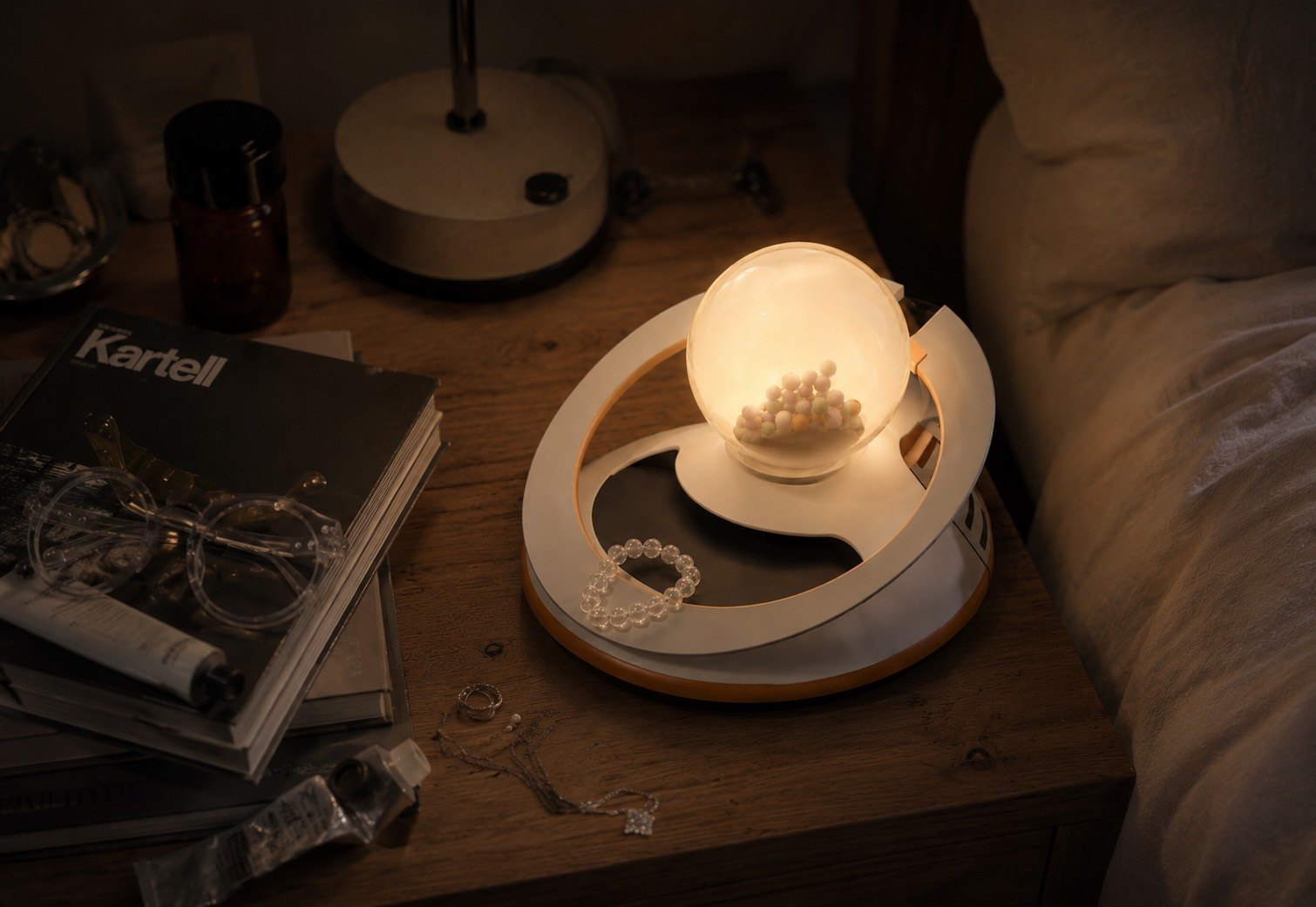
No screens anywhere. Every setting and reading comes from a hologram projected by the sphere. The charging spot is shaped like the tray you toss your keys in, so a few bracelets can pile up there the way keys already do.

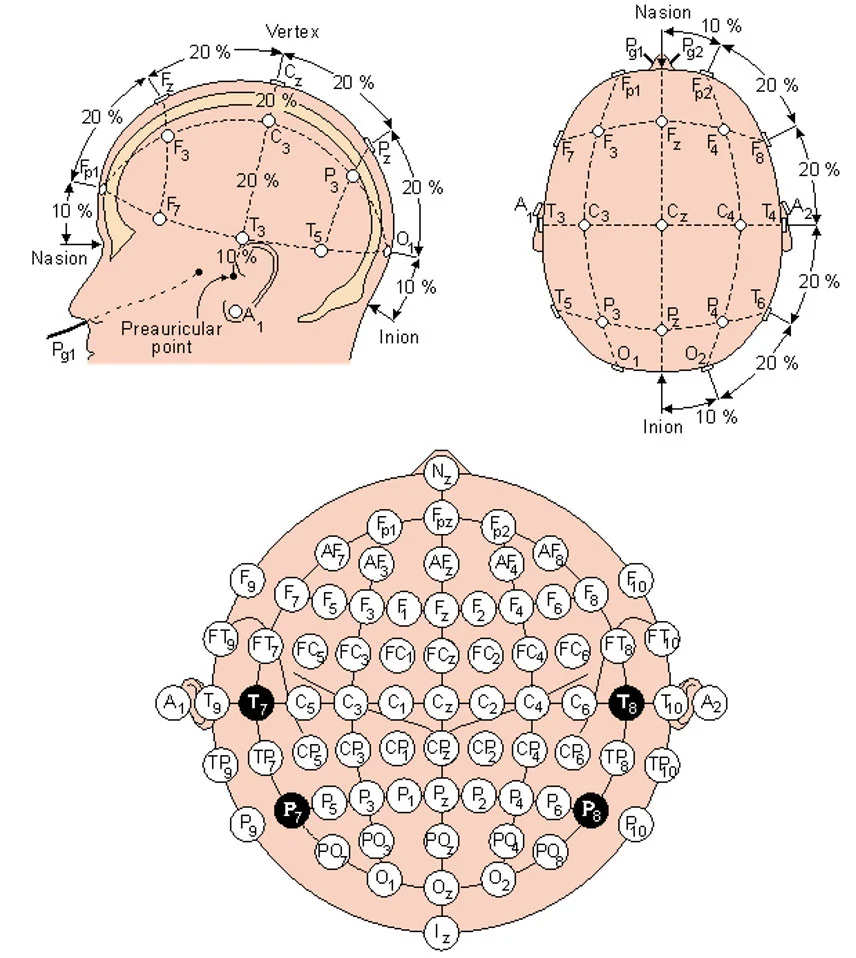
A pressure sensor feels how tight you're holding the beads. An IMU notices how fast or slow you fidget with them. An ECG picks up your heartbeat. Put together, it's a diary of your walk — written by your hands.
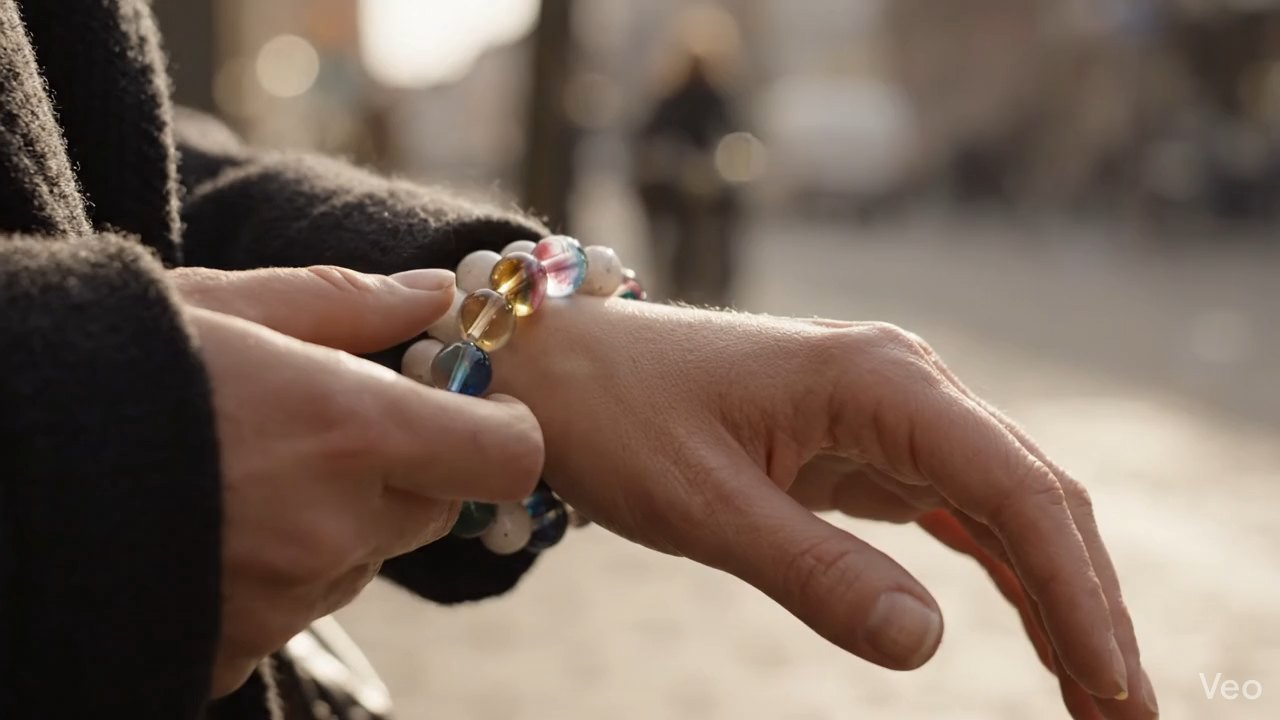
Prayer beads, worry stones, komboloi, mala — people have always kept their hands busy to calm their heads. Repeating a small movement quiets the noise up top and lets the deeper thoughts wander. So what if this old habit got a little high-tech?
Two stones. One cord. Lift it to your temple and Templa listens to your walk. Drop it to your chest and it's an amulet you carry.
Changing the pattern

Phone in hand, headphones on, world shut out. We walk through the city without really seeing it — our gadgets help us escape the walk.

Hands free, eyes up. The walk becomes the practice again — and Templa helps you come back to it.
Today's tech wants your attention. Templa wants to give it back.
Who is it for?
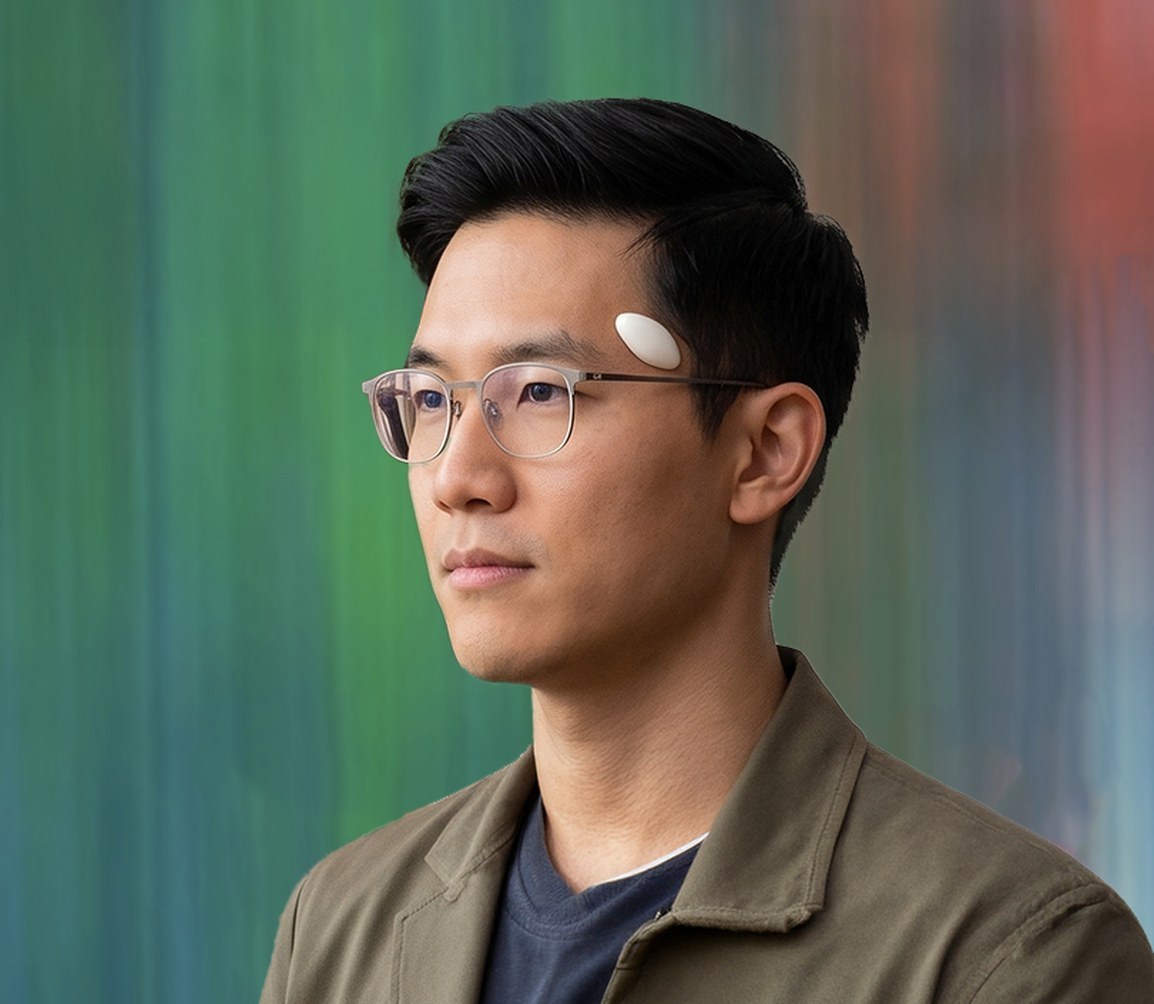
Julian Chen
Lead Creative Designer
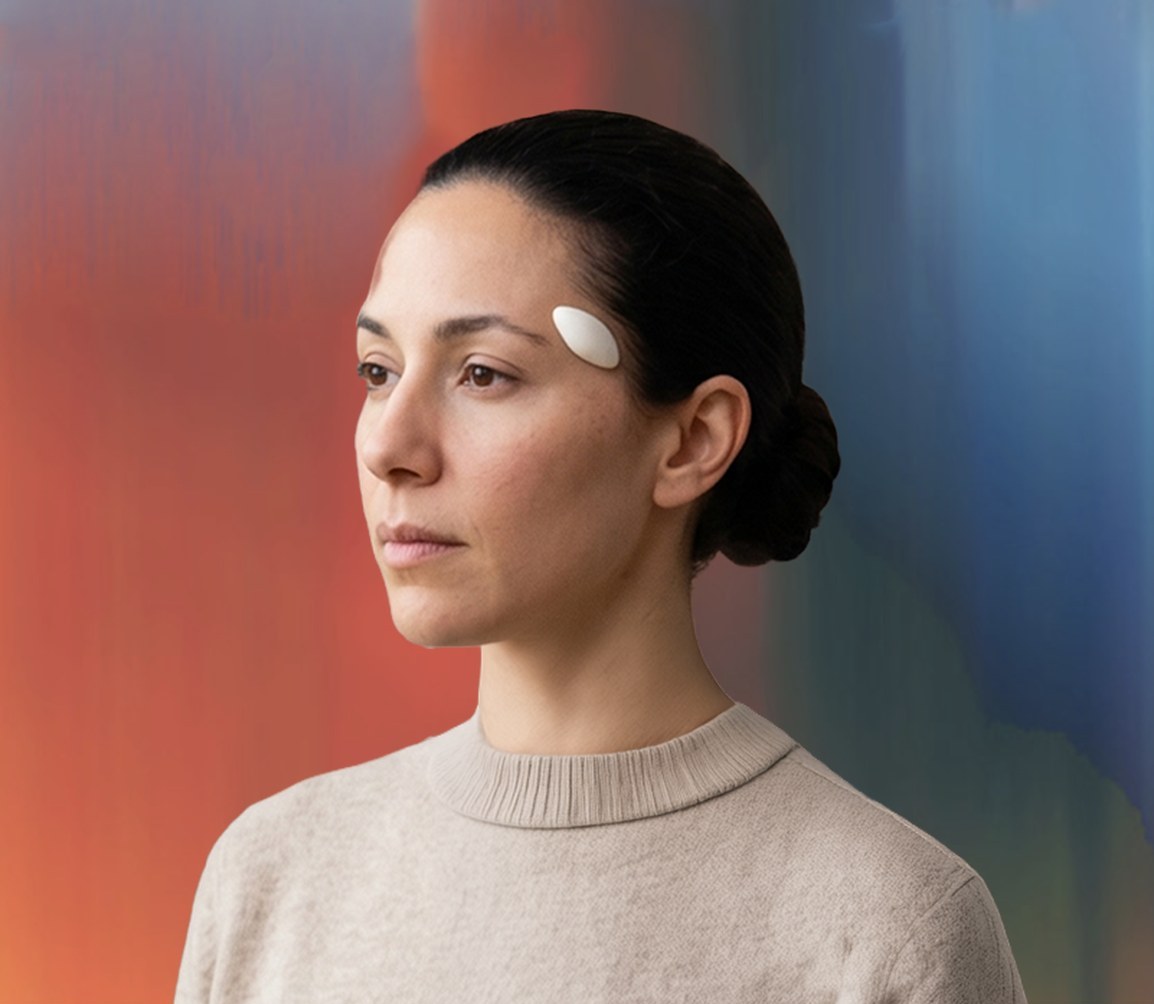
Sarah Jenkins
Active CBT Patient

Thorne Family
Husband, Wife, Son, and Daughter
Using AI as a processor
Understanding your brain
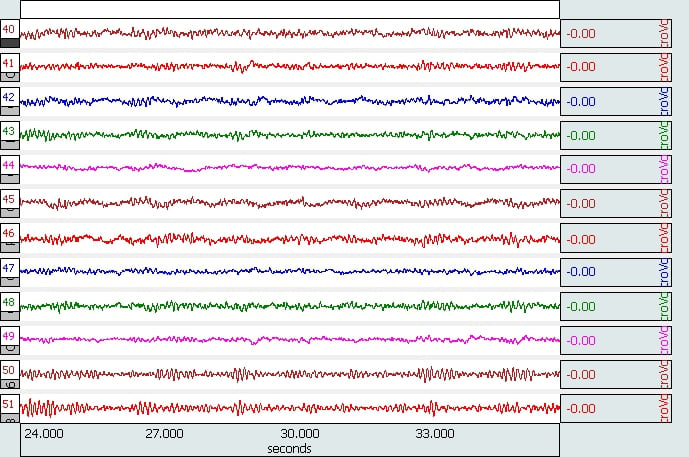
Raw EEG signals are messy.
Moving, blinking, your own heartbeat, even the electronics nearby — they all scramble the signal. Classic EEG needs perfect conditions to make sense of anything, which is why you mostly see it in labs and hospitals.
But the gap is closing, fast.
AI models trained on millions of brain signals can now find real patterns with far fewer sensors. In 2023 Meta decoded images from non-invasive MEG, and in 2025 a Nature Communications study decoded single words from EEG.
Flow of the system
EEG
Sits on your temple.
EEG
Brainwave
Picks up the raw signal.
Brain
Processor
AI finds the patterns hiding in the noise.
AI
Convert to words
The cleaned-up data goes into a language model, which turns it into words.
Words
Convert to image
If the signal leans more visual, it makes images instead.
Image
What AI could do in the future
2026→“Language models”
Models learn from what people make and type.
2036→“Multimodal models”
Models take in lots of kinds of data at once, so they understand more.
2046→“Personal neural models”
Models learn from your own brain data, so they can recognise and translate the way you think.
The AI doesn't read your thoughts. It learns to recognize them — the way an old friend recognizes the look on your face before you've spoken.
Mobility is flow
We want to make tech that sets you free, not tech that pulls you deeper into your screen. Tech that connects you back to the world, to your body, to your own mind. Every step you take should mean something.